Your gym membership costs money every month. Your protein costs money every month. Two to three hours of your time, multiple times a week.
Nobody calls those a chore. They're investments because you expect a return.
Logging your sets works the same way. Thirty seconds per set. Two minutes per session, roughly. It builds into something most lifters never have: a complete, accurate record of what you actually did.
What thirty seconds buys
One logged set tells you what you lifted today.
Thirty sessions logged tells you your progression rate. Three months of data tells you which muscle groups are actually getting priority. Six months tells you whether your programming is working — not whether it felt hard, but whether it produced measurable change.
The thirty-second cost is fixed. The return grows with time.
The compounding effect
Consistent data gets more useful the longer you maintain it. Session 10 is more informative than session 1 because you have something to compare against. Session 50 gives you five weeks of trend data. Session 200 gives you a baseline that most lifters simply don't have.
Most lifters never reach that baseline. They track for two weeks when motivation is high, then stop when life gets busy. Each gap resets the value. You're back to session 1.
Consistent tracking doesn't require motivation. It requires thirty seconds per set.
What the data pays back
After three months of consistent logging, your training history answers questions you couldn't answer from memory.
Are you progressing on your main lifts? Not a feeling — actual rep counts and load per set compared week to week. Your previous weights appear right there in the session, so you know exactly what you need to beat.
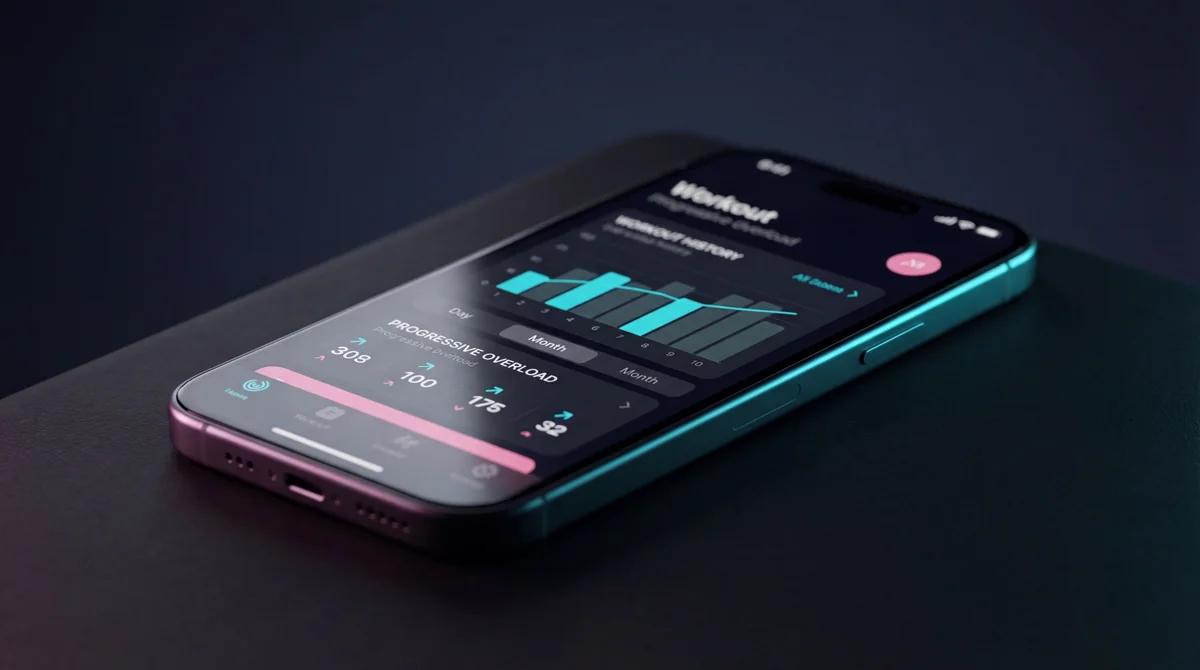
Are you training muscle groups proportionally? The Muscle Heatmap shows set distribution across back, chest, legs, arms, shoulders, and core. The imbalance you assumed wasn't there often is.
Is your Strain Score rising consistently? That's progressive overload reflected in actual training stress, not just the number on the bar.
Is your volume per session declining while effort stays constant? That's accumulated fatigue. Deload now or train into regression.
None of this is accessible from memory. It requires data.
The friction problem
Most lifters don't skip tracking because they doubt its value. They skip because the friction is high mid-session.
Timer running on one app. Log on another. Mental arithmetic to remember what you lifted last time. Three steps between finishing a set and starting the next rest period.
That friction is what kills consistency. Not the tracking itself.
Intrvl removes the steps. Timer and logging on the same screen. Your previous weights visible without switching apps or digging through history. Log the set, rest period starts automatically. Thirty seconds.
Once the friction drops, tracking stops feeling like extra work. It becomes part of the session — the same way timing rest periods does.
The cost of skipping it
You can train without data. Plenty of people do, and beginners often progress anyway because any consistent stimulus works in the early stages.
Intermediate and advanced lifters are past that phase. Progressive overload has to be deliberate because your body has already adapted to the easy gains. Imbalances need to be visible before they cause stalling or injury. Recovery management requires more than guesswork when accumulated fatigue starts affecting performance.
Without tracking, you're making decisions on feel. Feel is wrong often enough that it costs you gains — and you never know when, because you're not measuring.
Thirty seconds per set. Consistent. For six months.
That's an investment with a measurable return.
Time every interval. Track every lift. Know what works.
Try Intrvl free for 14 days. One payment ($24.99 USD), lifetime access. No subscriptions. No ads. All analytics included.